TYR
High-Impact UX, CRO, and Performance Optimization for TYR Ahead of Peak Season
Services
- Product Discovery Strategy
- Product Taxonomy and Data Architecture
- Search Optimization
- Site Speed Optimization
- UX Design
- UX Development
Background
TYR’s Shopify environment supports a diverse product taxonomy and high merchandising velocity across swim, training, and footwear categories. As seasonal demand intensifies, conversion efficiency depends on scalable filtering logic, accurate search configuration, consistent component behavior, and optimized theme performance.
A comprehensive UX and CRO audit identified structural inconsistencies across navigation hierarchy, tagging systems, search logic, PDP usability, and asset delivery. Rather than initiate a rebuild, TYR partnered with Avex to execute a targeted optimization sprint, reinforcing product discovery architecture and improving performance resilience ahead of Black Friday and Cyber Monday.
Tech Partners
- Shopify
- Shopify Search & Discovery
- Microsoft Clarity
- Google Analytics
- Google Lighthouse
Approach
Avex structured the engagement as a focused optimization sprint, prioritizing initiatives based on commercial impact, implementation feasibility, and timeline sensitivity. With peak season approaching, the team concentrated on strengthening the systems that drive product discovery and improving how customers navigate, filter, and evaluate products within TYR’s existing Shopify environment.
Navigation logic was clarified, underlying data structures were standardized, and interaction patterns were refined to create more consistent pathways from browsing to purchase. Sequenced through a disciplined roadmap, these improvements delivered measurable efficiency gains while preserving theme stability.
Insight-Led Execution
The engagement was grounded in findings from a prior UX and CRO audit supported by behavioral analysis and session-level data. Patterns in drop-off, inconsistent filtering behavior, and search inefficiencies revealed structural friction within the shopping journey.
Rather than apply broad optimizations, Avex translated these insights into targeted execution across discovery systems and performance infrastructure. Each recommendation was implemented with a clear link to usability and conversion efficiency ahead of Black Friday and Cyber Monday.
Strengthening Product Discover
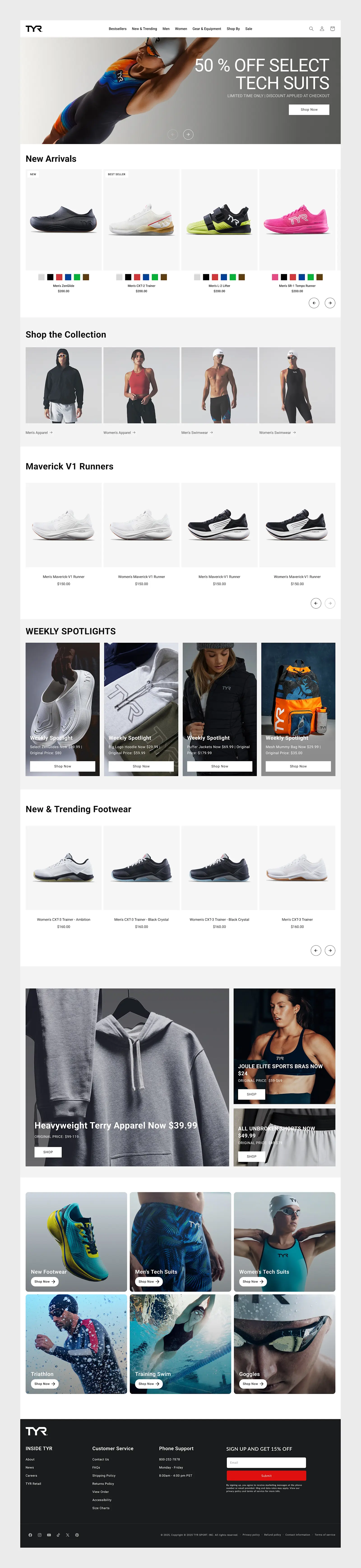
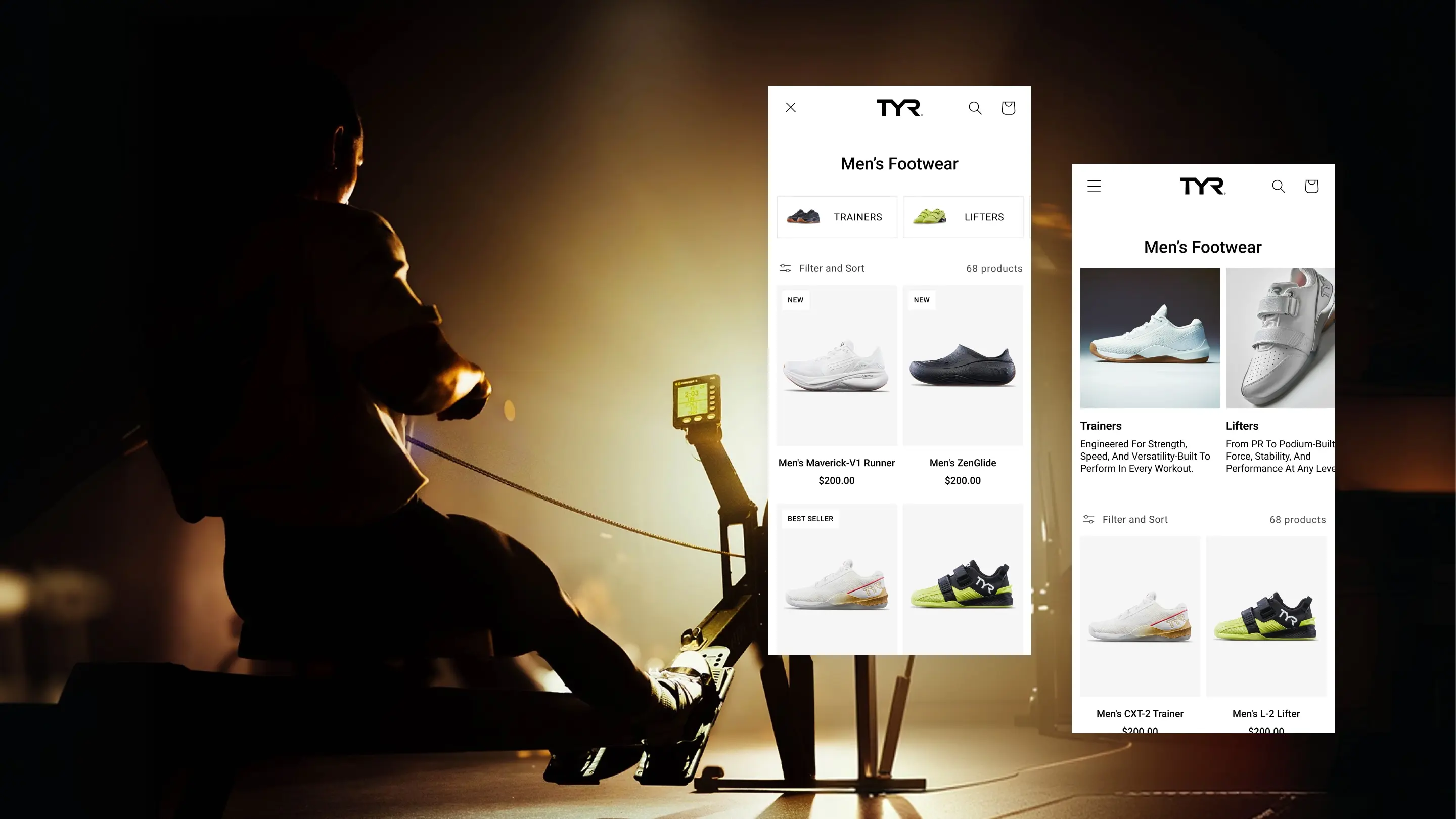
With a technically complex and expansive catalog, TYR’s peak season conversion depended on efficient product discovery. Avex clarified the navigation hierarchy and refined category entry points to better align with real browsing behavior, surfacing clearer, high-intent pathways into key collections.
To support this structure, filtering and sorting were rebuilt on standardized tagging and a more consistent product taxonomy, improving accuracy and scalability across collections. On-site search was reconfigured to expand synonym coverage and enhance result relevance, reducing dead ends during high-traffic periods.
Together, these refinements created a more intuitive and resilient discovery framework designed to perform under peak demand while supporting long-term catalog growth.
Conversion-First Product Evaluation
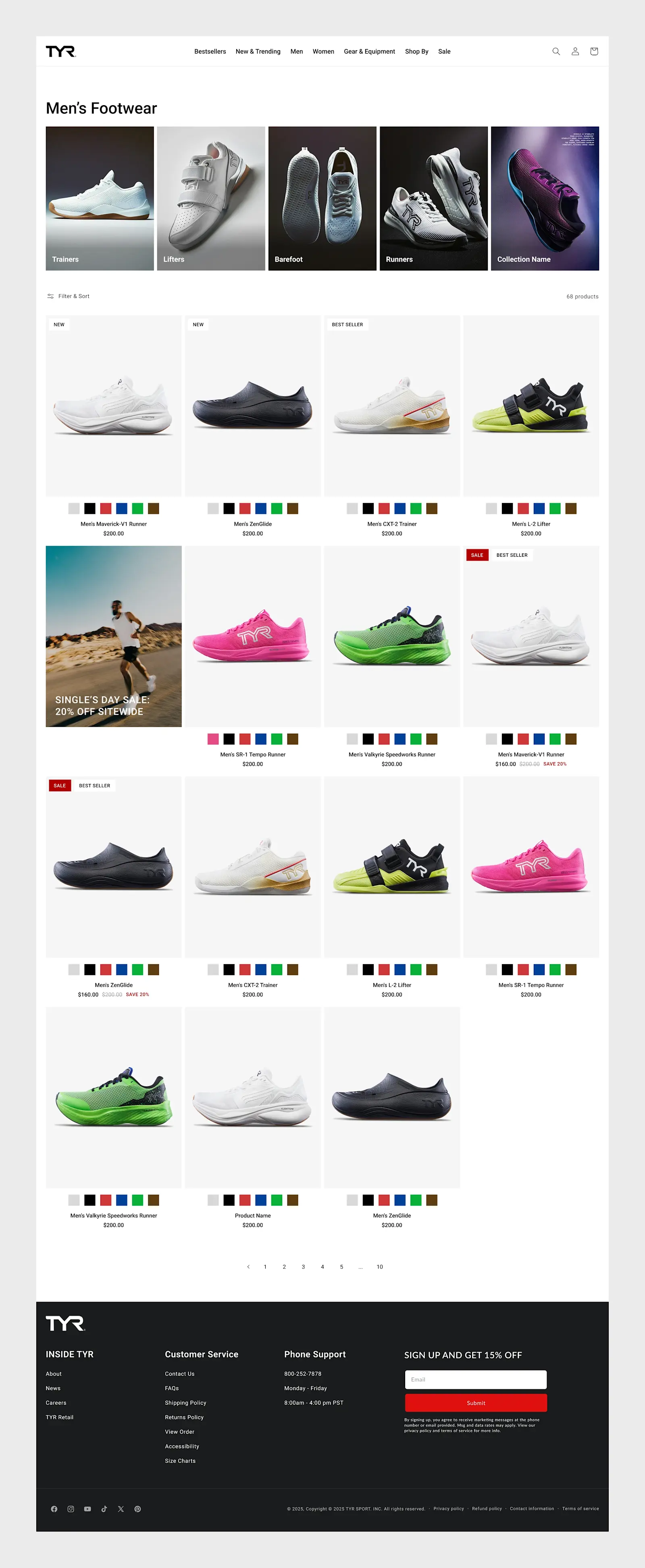
Once customers found the right products, Avex focused on reducing friction during evaluation. On PLPs and PDPs, product cards were standardized through a unified badging system powered by Shopify tags and compare-at pricing logic, creating greater consistency around pricing, promotions, and availability.
Sticky filtering on PLPs and a persistent Add to Cart module on PDPs kept key actions visible and accessible, maintaining momentum from discovery through product selection.

Streamlined Path to Checkout
To preserve purchase momentum, Avex treated the slide cart as a critical conversion surface, aligning interaction behavior and pricing logic into a cohesive system. Quantity updates, deletion states, and interaction feedback were refined to reinforce user confidence and reduce friction during cart modifications.
At the same time, pricing logic was tightened to eliminate ambiguity. Percentage-off calculations were standardized across templates, and out-of-stock variant handling was improved to reduce confusion before checkout. Together, these refinements strengthened continuity between product evaluation and purchase completion.

Performance and Stability
With peak traffic approaching, performance optimization became essential to supporting conversion at scale. Working within TYR’s existing Shopify theme, Avex conducted targeted cleanup, removing unused JavaScript and CSS, consolidating redundant Liquid logic, and eliminating legacy scripts that were contributing to unnecessary load weight and inefficiencies.
These structural improvements were paired with navigation performance enhancements, including reserved space adjustments and smoother transitions to reduce visual instability during load. By streamlining asset delivery and tightening front-end patterns, Avex strengthened site speed and reliability ahead of Black Friday and Cyber Monday, ensuring the storefront remained stable and responsive under increased demand.

Results
The impact of the optimization initiative was reflected in TYR’s Q4 performance following deployment. Compared to the prior year, the site demonstrated stronger efficiency across both demand capture and conversion execution during peak season.
Compared to Q4 2024, Q4 2025 delivered:
- +25% YoY growth in Revenue
- +37% YoY growth in total orders
The Partnership
Operating within a compressed pre-holiday window meant every decision carried weight. Strategy, design, development, and TYR stakeholders worked in close alignment, prioritizing impact over iteration and clarity over complexity.
The partnership was defined by transparency, rapid feedback, and disciplined execution. That cohesion allowed meaningful improvements to be implemented quickly, ensuring readiness ahead of peak season without sacrificing long-term stability.

Let’s work together
Tell us your business goals and we’ll see how we can create something amazing together.